Build vs. Buy: What It Actually Costs an Agency to Ship Its Own AI Receptionist
Telephony, LLM tokens, calendar integration engineering, on-call escalation, and the maintenance tail — an itemized, honestly-caveated estimate of what building your own AI receptionist actually costs, versus reselling one.
By AgentLane Founder · Founder
A missed-call AI receptionist looks like one product from the outside. From the inside, it's five separate systems stitched together — telephony, an LLM, a calendar integration, an escalation path, and the ongoing maintenance across all four — and the honest cost of building it in-house is dominated by the last one, not the first. This is an itemized walk through the real cost centers, with directional estimates clearly marked as estimates, not a market-research number pretending to be precise.
If your agency is weighing whether to build a missed-call/AI-receptionist automation yourselves versus reselling one, this is the checklist to run the numbers against before committing engineering time.
The five real cost centers
1. Telephony (Twilio or equivalent)
You need a programmable phone number, inbound call/SMS handling, and webhook infrastructure to receive events. Twilio's own per-number and per-minute rates are published and change periodically — check them directly rather than relying on a number quoted in a blog post, since this is exactly the kind of figure that goes stale fast. The engineering cost sits alongside the usage cost: someone has to build and maintain the webhook receiver, handle Twilio's signature validation, and deal with call-forwarding edge cases (voicemail, busy signals, international numbers) that don't show up until a real client hits them.
2. LLM API costs
The AI receptionist needs a language model that can hold a real conversation — read the caller's intent, ask clarifying questions, and produce a structured output the rest of the flow can act on. Token costs vary by model and provider and are genuinely a moving target (providers reprice regularly), so treat any specific per-conversation cost as a rough, current-as-of-writing estimate rather than a fixed number. What's more predictable is the engineering cost around it: prompt design, output parsing that doesn't silently break when the model's response format shifts slightly, and a fallback path for when the model call itself fails or times out.
3. Calendar integration engineering
Booking a real appointment — not just suggesting a time, but checking actual availability and writing back a confirmed slot — means integrating with whatever calendar system the client uses. Cal.com is a common target because it has a clean API, but "clean API" still means: authenticating per client, handling timezone conversion correctly (a wrong timezone on a booked call is one of the most client-visible failure modes there is), handling double-booking races, and gracefully declining/nurturing a lead when no slot fits. This is not a weekend integration if it has to survive real client usage.
4. Escalation and on-call tooling
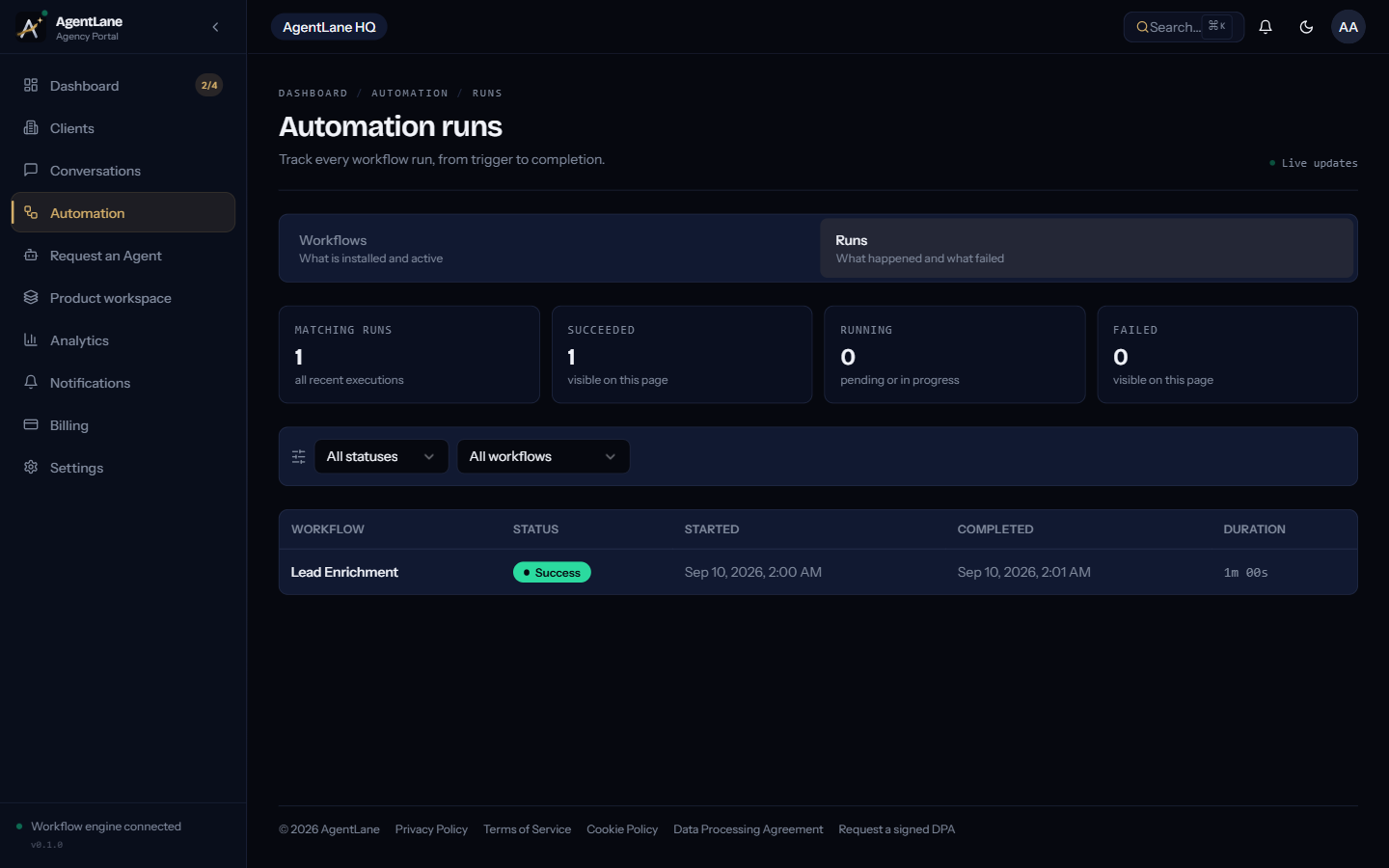
This is the cost center agencies most often underestimate. An AI agent answering real calls will, eventually, mishandle one — misread an urgent request, book the wrong service, or simply not know what to do with an edge case. Someone on your team needs to be reachable when that happens, and you need a way to know it happened in the first place: a real-time execution feed or equivalent, alerting on failures, and a documented path for a human to step in. Building this well means Slack/SMS alerting, a dashboard your team actually checks, and — ideally — an audit trail per conversation so a disputed interaction can be reviewed after the fact, not argued about from memory.
5. The ongoing maintenance tail
This is the cost that doesn't show up in an initial build estimate at all. Twilio's API surface changes. LLM providers deprecate models on their own schedule, not yours. Cal.com ships breaking changes to its API occasionally, like any actively developed product. A prompt tuned correctly for a home-services client in January can misfire by March once seasonal call patterns shift — the Lead Qualifier walkthrough covers this exact failure mode in a shipped agent. None of this is a one-time cost. It's a permanent, low-grade tax on whichever engineer owns the integration, for as long as it's live.
What buying removes from this list
Reselling a white-label agent instead of building one doesn't remove the underlying reality that a voice/chat automation touching real client calls needs active monitoring — it removes the engineering and maintenance burden from your team's plate. AgentLane's model, concretely: your agency requests a pre-built agent from the catalog, fills in client-specific configuration (business hours, services, Cal.com link — see Deploy your first agent), and the telephony, LLM orchestration, calendar integration, and Slack-based escalation are already built into the flow. What your team owns instead is watching the executions feed and the client relationship — not the pipeline underneath it.
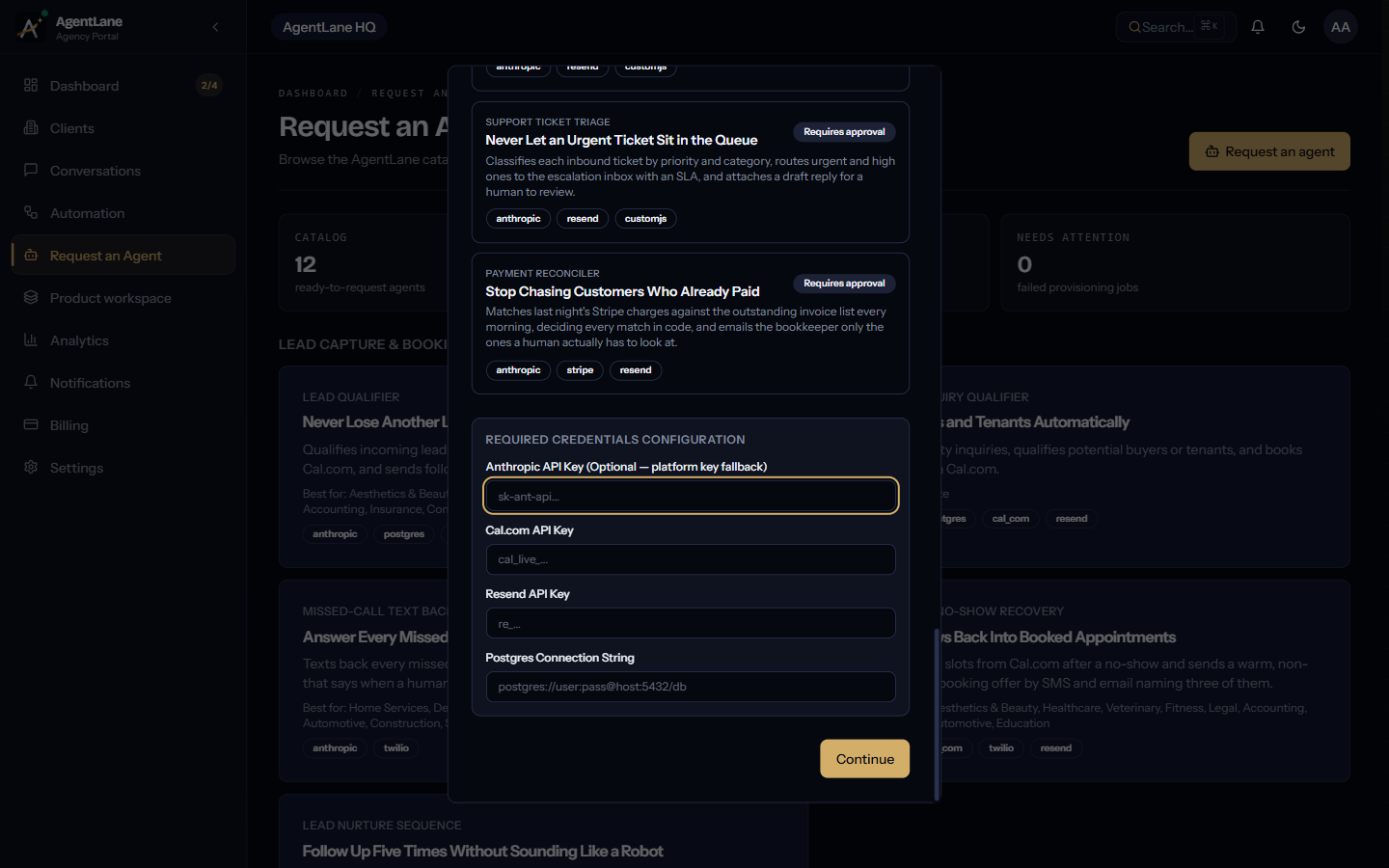
The pricing reflects that shift: a flat $199–$249/month per agent, per client, by plan tier (your own plan's exact figure is shown in AgentLane's Request an Agent dialog), replaces the build-and-maintain cost with a predictable line item. Whether that's cheaper than building in-house depends entirely on your own engineering rates and how many clients you're serving — the margin math post walks through that calculation directly.
A rough framework for deciding
Building makes sense when: you have spare, senior engineering capacity that would otherwise sit idle; you have one specific, unusual requirement none of the catalog agents cover; or the automation is core enough to your product that owning the whole stack is a strategic bet, not just a cost decision.
Buying makes sense when: your team's time is better spent on client relationships and sales than on maintaining phone infrastructure; you want to pilot the idea with one client before committing real engineering budget; or you've already tried the build path and discovered the maintenance tail is the part nobody budgeted for.
Where to go from here
If you want to see exactly what a pre-built flow looks like before deciding, the Lead Qualifier agent reference documents the actual node-by-node flow, not a simplified marketing version. If you'd rather talk through your specific case, book a consultation.
The estimates above are directional, not sourced market research — telephony and LLM pricing move too often for a blog post to quote precisely, so I've caveated every number that isn't pulled straight from AgentLane's own product.
Frequently asked questions
- Isn't building it yourself cheaper if I already have developers?
- The build cost is real either way — it's just paid in engineer time instead of a monthly fee. The number that actually matters is the ongoing maintenance tail, not the initial build: a missed-call automation touches phone infrastructure, an LLM provider, and a calendar API, and all three change on their own schedule, which means it never stops needing attention once it's live.
- What's the single biggest hidden cost in building this in-house?
- On-call escalation. A voice agent answering real client calls will eventually mishandle one, and someone needs to be reachable when that happens — not next sprint, that day. Agencies that skip this step find out about it from an angry client, not a monitoring alert.
- Does buying eliminate all of these costs?
- No — it eliminates the engineering and maintenance cost, not the underlying reality that a voice/chat automation touching real client phone lines needs monitoring. What changes is who's on the hook: with a white-label partner, that's their job, and you watch a real-time execution feed instead of maintaining the pipeline it comes from.
- How long does building an MVP version actually take?
- This varies enormously by team and scope, so treat any specific week-count as a rough estimate rather than a quote — but a genuinely production-ready flow (not a demo) that handles calendar booking, business-hours logic, and a real escalation path is materially more engineering than a first working prototype, which is where most in-house estimates go wrong.